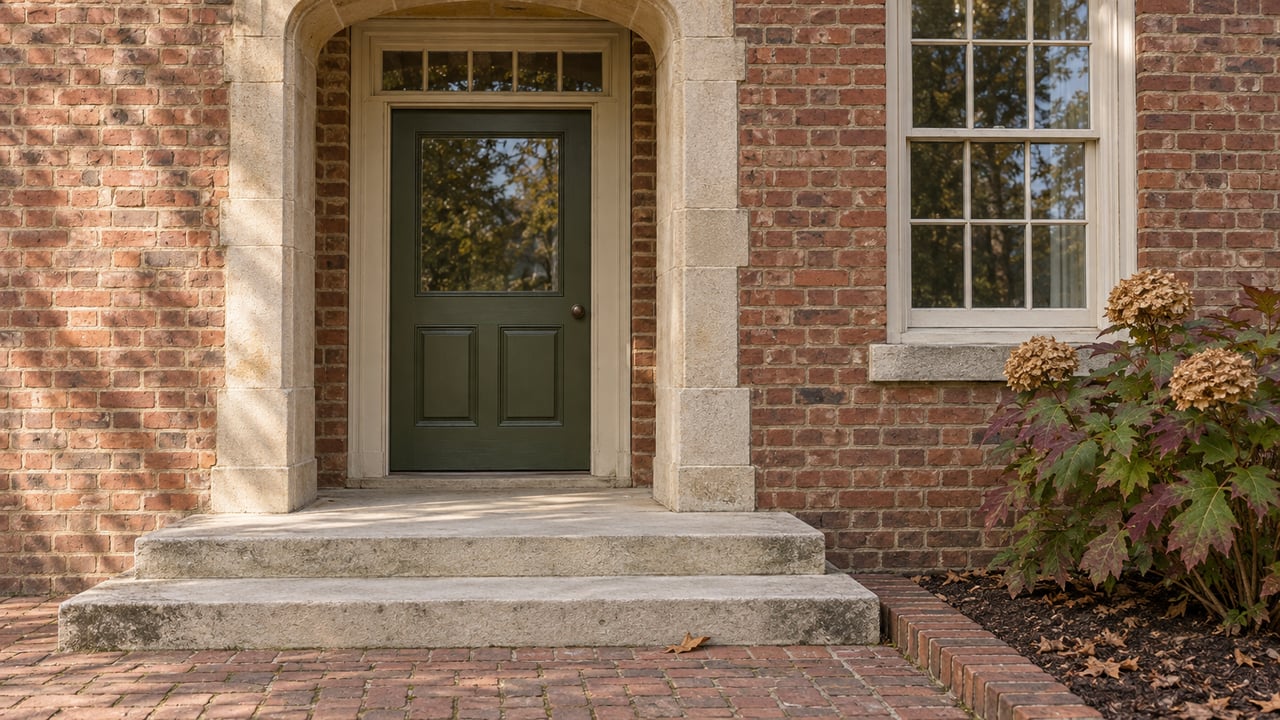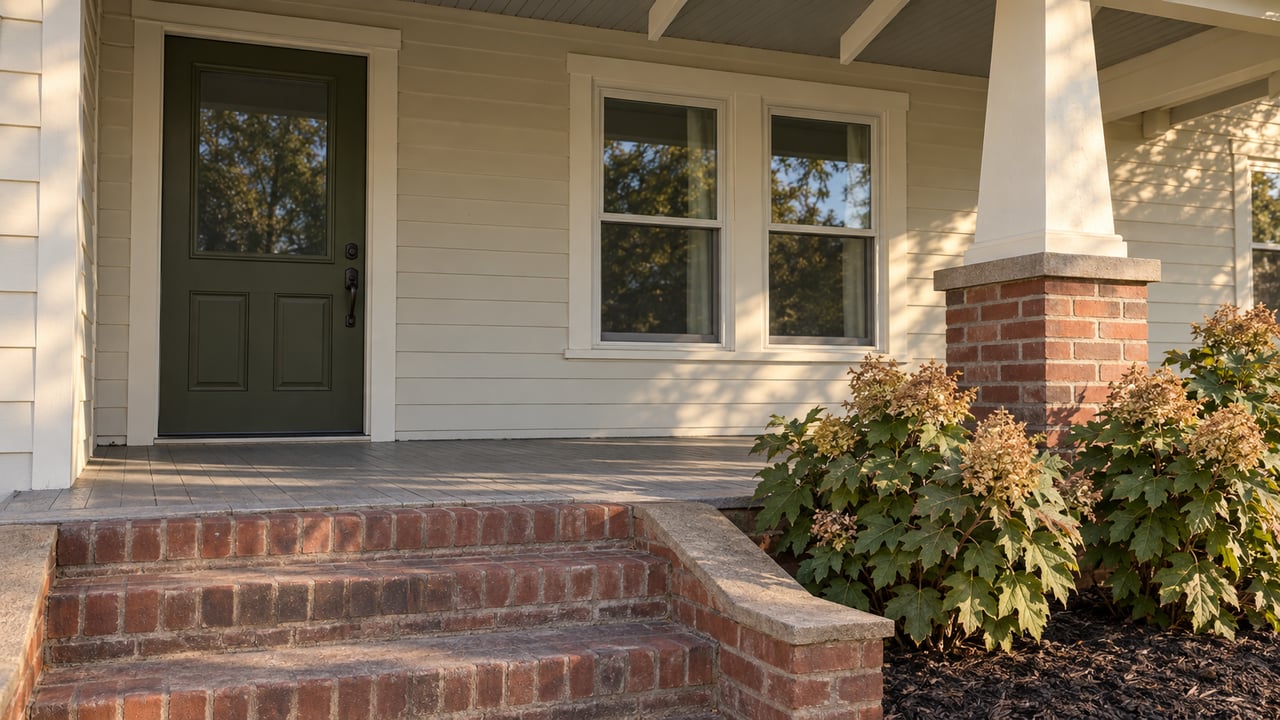
Picture the sequence most sellers expect: list the house, get an offer within a few weeks, clear the inspection, close. In Franklin's older neighborhoods, that sequence has a second track running underneath it, one that has nothing to do with the buyer's financing and everything to do with a porch that got repainted three summers ago without anyone filing the right paperwork.
Here is the version that plays out more often than sellers expect. A c. 1900 foursquare in one of Franklin's local historic districts goes under contract. During the transaction, the seller learns that the exterior color change and the rebuilt front steps from a few years back were never run through the city's design review process. The work itself might be fine. The documentation is the problem, and now it is the closing's problem too.
The overlay most buyers never think to ask about
Franklin has seven local historic districts sitting inside its Historic Preservation Overlay, and Hincheyville is the oldest of them: Franklin's first residential addition, subdivided in 1819 by merchant Hinchey Petway and listed on the National Register of Historic Places since 1982. Downtown's core historic blocks and several other pockets carry the same overlay status. If a house sits inside one of these boundaries, any exterior change visible from the street, paint color, roofing, windows, porches, fences, additions, needs sign-off from the city's Historic Zoning Commission before or during the work, not after.
According to the city's design guidelines, the HZC is nine citizen appointees representing architecture, history, planning, and the general community. It meets once a month to review Certificate of Appropriateness applications, what everyone in Franklin's preservation world just calls a COA. Minor alterations can sometimes clear through an administrative COA, reviewed by city preservation staff without a full commission hearing. Anything more substantial goes to the monthly meeting, where it either gets approved, gets approved with conditions, or gets sent back for revision.
Why this becomes a seller's problem, not just a renovation problem
Sellers tend to think of the COA process as something that matters to the next owner: whoever buys the house and wants to change the windows deals with the city, not them. That framing misses the part that actually bites during a transaction.
If a prior owner repainted, re-roofed, or replaced porch elements without a COA on file, that gap does not stay invisible. It shows up in permit history pulled during underwriting, in a sharp-eyed appraiser's notes, or in a buyer's agent asking the question every experienced Franklin buyer eventually learns to ask: can you show me the COA for that?
A missing answer does not necessarily kill a deal. It does almost always cost time, and time is the one thing a seller who already has movers scheduled cannot easily manufacture.
Two clocks, one contract
The gap between the market's clock and the preservation clock is the part most listing conversations skip. Over the three months ending June 2026, Franklin's median sale price ran roughly $864,000, up 5.3 percent from the same period a year earlier, with homes taking an average of 48 days to sell. As of August 2026, the city was carrying roughly 3.7 months of housing supply, still below the five to six months that typically signals a balanced market. That is already a longer runway than the frantic, multiple-offer pace Franklin saw a few years back.
Layer a COA requirement on top of that, and the math changes again. Because the HZC only meets monthly, a straightforward exterior project can run 60 to 90 days from first conversation with preservation staff to final approval, according to All Bright Pro Painting. If a submission comes back with conditions, a common outcome when color choices or material specs are not documented with historic justification, that timeline slides to the following month's meeting.
| Standard market timeline | Historic overlay timeline | |
|---|---|---|
| Typical driver | Buyer financing, inspection, appraisal | HZC monthly meeting cycle |
| Recent average | 48 days on market (Franklin, 3 months ending June 2026) | 60 to 90 days for a single exterior project |
| What resets the clock | Financing contingency, repair negotiation | Incomplete application, denied color or material request |
A seller who assumes the second clock does not apply to them because "it's just paint" is the seller most likely to watch a closing date move.
The COA you already have might not still be valid
Even sellers who did everything correctly the first time can run into a second version of this problem: an old COA that has quietly expired. Under the city's design guidelines, a Certificate of Appropriateness is valid for two years from issuance, with a single six-month extension available if requested in writing before it lapses. A five-year-old approval for a porch rebuild or a window swap does not carry forward. If that work was never finished, or if a buyer's contractor wants to complete related work after closing, the process starts over.
Franklin also adopted an entirely new Zoning Ordinance effective January 13, 2026, and it includes transitional rules worth knowing about if a prior COA, permit, or approved plan is still active. Approvals valid on the effective date remain valid through their own expiration date. Applications submitted on or after January 1, 2026 fall under the new ordinance unless the applicant formally requests review under the old one. For a seller who inherited paperwork from a previous owner, or who started a project and paused it, that transition is exactly the kind of detail worth confirming with the city's preservation staff before assuming an old approval still covers anything.
The disclosure that stacks on top
Historic districts in Franklin skew toward older homes. A folder of permits, COAs, and disclosures assembled before a home goes on the market saves real time once it is under contract.
What this means if you are getting ready to list
None of this argues against listing a historic-district home in Franklin. Buyers actively seek out these blocks for exactly the character the overlay protects, and the city's own preservation program exists to keep that character intact while still allowing sensible updates. What it argues for is sequencing.
Before a historic-district home goes on the market, it is worth pulling the full COA and permit history, confirming which approvals are still active and which have lapsed, and starting any conversation with preservation staff well ahead of a target list date rather than after an offer arrives. A seller who begins that process 90 days out is working with the city's calendar. A seller who discovers a documentation gap during underwriting is working against it.
This is precisely the kind of coordination that separates a smooth historic-home sale from a stressful one, and it is the sort of behind-the-scenes project management that Your Nashville Agent builds into every historic listing: pulling the paperwork trail early, flagging anything that needs a fresh COA before it becomes a lender's question, and keeping the preservation calendar and the closing calendar moving in the same direction instead of against each other.
Frequently asked questions
Does every exterior change need a COA, even something small like a storm door? Not necessarily. Franklin's guidelines allow certain minor alterations, particularly on non-historic or rear-facing elements, to go through an administrative review handled by preservation staff rather than a full HZC hearing. The safest first step is a quick conversation with the city's preservation planner before starting any visible work.
What if I plan to sell as-is and let the buyer handle any exterior work? That can simplify things on your end, but it does not remove the paperwork question. Buyers and their lenders still want to know whether existing exterior features were altered with proper approval
How do I find out if my home sits inside one of Franklin's seven historic districts? The city's Historic Preservation page maintains maps and district information, and preservation staff can confirm overlay status for a specific address directly. It is worth checking even if a home does not look conspicuously historic from the street, since some district boundaries extend further than buyers expect.
If you are weighing a sale in one of Franklin's historic neighborhoods and want a clear read on what your specific property's paperwork trail looks like, Your Nashville Agent offers a complimentary home valuation and can help you map out the preservation timeline alongside the market one, before either clock starts working against you.
This article is general information, not legal, tax or financial advice. Consult a qualified professional about your situation.